How the AJSA Shapes Industry Leaders
by Cloe Tolar
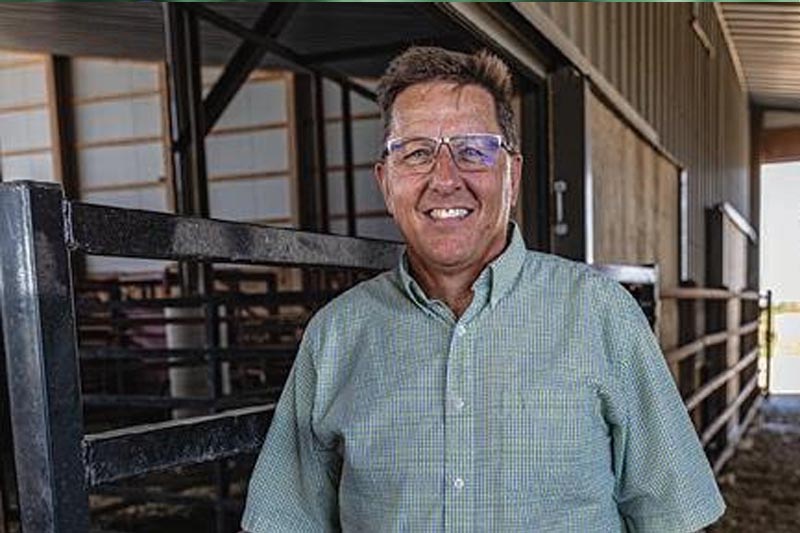
Tom Hook has been involved in SimGenetics from a very young age, participating in AJSA events that helped shape his values, career, and future.
Editor’s note: This is the second article in a series highlighting the significance of the AJSA in Simmental breeders’ lives.
Tom Hook grew up in Tracy, Minnesota, and has lived there his entire life. His family has run a diversified crop and livestock farm since 1900, and his grandchildren are the seventh generation of the family operation. Hook participated in the AJSA, and later served on the ASA Board of Trustees. Today, through his work with Allied Genetic Resources, Hook is staying involved with Simmental cattle.
Tolar: What was most memorable about your experience in the AJSA?
Hook: From a personal standpoint, it was probably receiving one of the early Gold Merit scholarships, which helped with my college tuition. It furthered my interest in the breed, and we were all in. We’ve all been involved for over 50 years now, supporting the breed not only as breeders, but by hosting events, and I served on the ASA Board of Trustees. I think it served to launch my interest, as well as encouraged us to raise cattle and improve the beef industry.
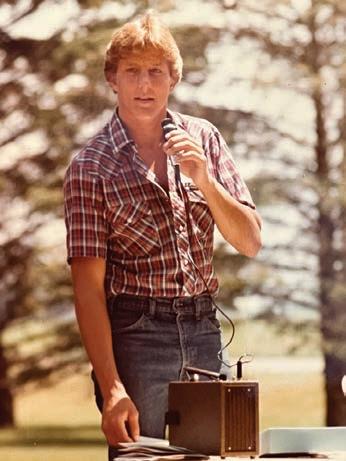
Hook speaking at a Minnesota Field Day in the early ’80s. Hook credits the AJSA with building his public speaking skills.
One of the greatest blessings is the network that you build at a young age. People come and go, but in the cattle business, it seems like you continue to work with them for a lifetime and become great friends as well as customers. Looking at those friendships and fellow Simmental enthusiasts, it’s hard to believe that we’ve worked together for over 50 years.
What’s really neat is some of those youth members that I met back in the ’70s or back in college in the early ’80s, I still work with today. I think as long as you conduct business with integrity and treat each other like you’d like to be treated, those friendships go very well.
Why are youth agricultural organizations like the AJSA important?
I don’t think there’s any question that whether it’s the AJSA, 4-H, or FFA, learning to care for and raise animals gives you discipline and perspective on life that you can’t get anywhere else. You learn about life and death. You learn about responsibility, and that if you don’t care for them, they won’t thrive. There are some valuable life lessons that the AJSA can develop, and especially in its current format. I know that showing is a big part of it, which I loved to do when I was young, as well as into our younger adult life of selling seedstock, but there are so many other programs, from public speaking to networking with other breeders, that are a part of the AJSA beyond showing.
It’s a really good training ground for youth to be ambassadors, for not only the beef business but agriculture in general, because the number of participants in the agriculture community is really small in relation to the larger population. Without an understanding of production agriculture, we don’t have good advocates, and I think the junior associations, as well as the FFA, provide training ground to be great ambassadors for production.
How do the skills young people gain in the AJSA reach beyond agriculture?
It’s no different than any kind of youth development — from decision-making skills, learned from livestock judging, to impromptu speaking skills learned from sales talk presentations, and critical thinking from the herdsman and Sire Summary quizzes, all provide essential
skills that will be used your whole life. The AJSA membership and activities help you learn how to interact and understand livestock practices from different regions of the United States.
I think one of the biggest things that you have to learn is how to compete fairly. It’s okay if you get knocked down, but you’ve got to get up and try again. Don’t disparage those who beat you from the standpoint that they won. If winning is a goal of yours, work hard to achieve that in the future, but I would say to win humbly and lose with grace.
How did your experience in the AJSA inform your career decisions?
I wanted to farm at a very young age. I was one of those who just loved it. I guess I knew what I wanted to do, and I like the diversity of crop production as well as livestock production. And so I went to college and grad school to get degrees to help further that.
My best mentors were my parents, my grandparents, and the multi-generational farm. They were the biggest part of the education that I got growing up, but the AJSA definitely furthered that interest. It’s been a real blessing to be a part of it.
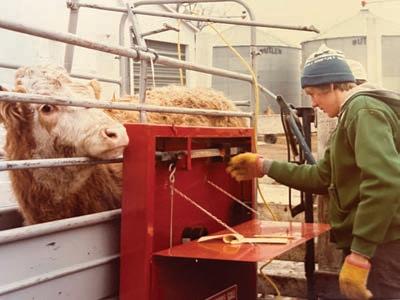
Hook recording weights on yearling heifers with a scale he purchased as a part of his AJSA and FFA beef proficiency project in 1980.
What impact did the Simmental breed have on your breeding program and on your career?
I have been blessed to work with several people who were mentors to me during my early years of breeding Simmental seedstock: Steve Reimer in South Dakota; Bob Dickinson in Kansas; Roy Wallace in Ohio, and Dr. John Edwards in Texas. I still use and implement today principles inspired by these individuals who were kind enough to share their wisdom and life experiences in the beef industry with me. Simmental came through some really rough times based on breeding decisions that, even as a young breeder, I was a part of, and the cattle just didn’t fit the industry. I find great personal satisfaction in seeing how we survived that, we have come through, and actually now play a vital role in the genetic makeup of the cow herd and the beef industry in North America.
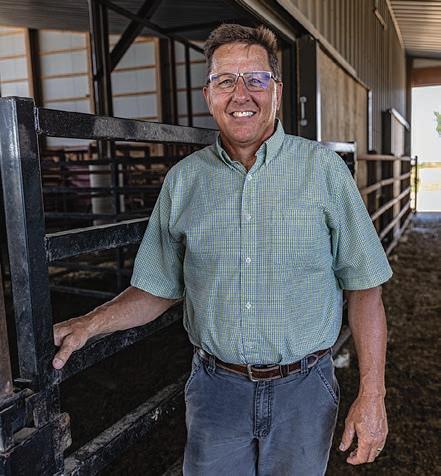
Hook grew up on his family’s diversified beef cattle and farming operation, which started in 1900.
I also take great satisfaction in the success that breeders have enjoyed over the last five years. For the early breeders, the foresight they had to set up the Association, the way they did, was crucial to survive some really rough times where the Association, as well as the breeders, were really struggling to be profitable. To come through the other side and be where we’re at now, it’s so cool to see how ASA and the breeders have done.
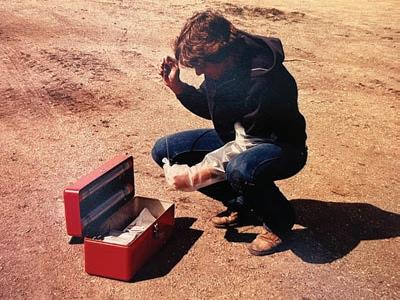
Hook attended AI school when he was 16 years old.
Do you have any advice for a young person who is stepping into their first job or career?
A couple of things that always hold true are to always conduct business with integrity. Your word is your bond, and you should surround yourself with the best mentors and colleagues that you can. It’s so much more fun doing it together with a team and having success than it is to do it by yourself. I love working with people, doing things together, and winning together. My lifetime has been so much more satisfying doing things as a team. .