by Lilly Platts
Beef is one of the most popular proteins in the US, with demand remaining strong despite a higher per-pound price.
Increased interest in protein intake and nutrient density has helped keep beef on dinner plates, as individuals cook more at home, and seek to maximize their diet. The modern consumer’s decisions surrounding food are far from simple, and always evolving.
Dr. Mandy Carr Johnson shared about the factors that affect consumer behavior, trends, and what the industry needs to consider during the 2025 Beef Improvement Federation Symposium in Amarillo, Texas.
Who is eating beef?
Age demographics show who is buying the most beef, and which group will be the most important in the near future. Currently, Millennials (born 1981–1996) and Gen Z (born 1997–2012) make up the largest segment of the US population. Millennials are one of the largest-consuming populations influencing spending and buying habits across all foods, including beef.
Despite this, buying power still lies with Gen X, born from 1965 to 1980. “What distinctly differs is buying power,” Johnson said. “If you look at the ones with the greatest buying power, it’s Gen X. Most of their children are out, or close to being out of the home, but they are still working, so they have more disposable income.”
With the Millennial generation being the largest age group in the US, their buying power will be especially strong once they reach this same life stage. “Today, there are consumers in more distinct categories in the marketplace than ever before,” Johnson explained.
The National Cattlemen’s Beef Association and Beef Checkoff regularly survey consumers about the key things that make up the decision to purchase or not purchase beef. Eating experience is consistently a top priority. “If you have a bad eating experience with any product, particularly beef, then for a consumer it might cause them to not eat it the next time,” Johnson said. “It is still one of the most critical factors influencing consumer decision to buy and consume beef.”
Convenience and versatility are priorities for consumers. Price is also a consistent factor in consumer choice, and Johnson emphasized that while producers have very little say in the price of beef on grocery store shelves, they can help promote the value of the product. “What we can do is help consumers know how to utilize beef so they feel that the price they paid is worth it,” she said.
How beef is raised and grown, and nutrition are also top priorities among consumers in these surveys. Consumers have shown a steady increase in knowledge about how the food they eat is raised. Ounce per ounce, beef is the most nutritionally dense protein on the market, which continues to support demand.
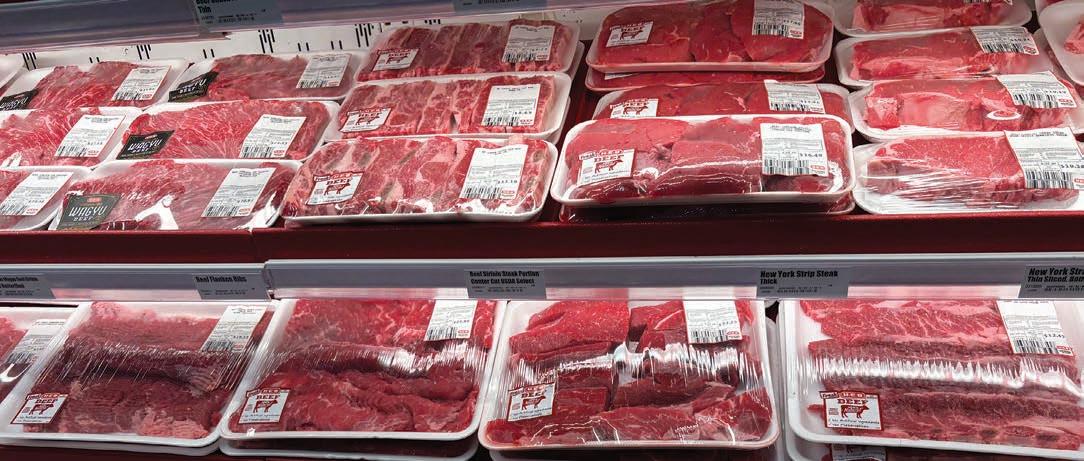
Above: Most consumers source their beef in traditional grocery stores. Opposite: Consumers continue to put the most trust in those who deal with the raising of beef cattle, as opposed to the media.
What are consumers choosing?
Chicken continues to outperform beef, with 43% of consumers saying it’s their number one choice compared to 36% saying they reach for beef first. Other proteins, including fish, pork, and plant-based fall far below at 13%, 4%, and 4% respectively.
The low price of chicken, convenience, and knowledge of how to prepare the protein all contribute to this preference. When surveyed about weekly choices, 83% of consumers said they eat chicken weekly, and 71% said they eat beef every week.
Data shows that consumers generally prioritize variety in their protein choices, which bodes well for beef. “Consumers want choice,” Johnson explained. “They choose all of the different proteins across the week.”
Meat alternatives remain a topic of conversation within the industry, but consumer data puts this influence in perspective. Lab grown meats are not readily available to consumers in retail or food service, but many plant-based alternatives including alternative hamburger patties, chicken nuggets, breakfast sausage, and more can be found on most grocery store shelves. Around 25% of consumers surveyed said they eat a meat alternative each week. Among this 25%, most also ate chicken, pork, beef, or another animal protein as well. Again, Johnson emphasized that choice and variety are a priority.
From the perspective of market share, alternative proteins take up less than a percentage point of the overall market. “We often hear a lot about plant-based proteins and taking market share, but I think it’s important to understand and have perspective,” Johnson said.
Why are consumers choosing beef?
As the most expensive protein on the market, consumers who choose beef have to place real value in their decision, especially when choosing higher-end cuts. The dollars consumers spend on beef have grown fairly steadily since 2010, and were up a full 100% by 2024. This means that the eating experience is more important than ever. “One thing we do know is that now more than ever, consumers are spending more money on protein, particularly on beef. We have to be aware of that. It does provide a great opportunity as producers, and value for the animals we raise,” Johnson explained. “However, for consumers, we have to be cognizant of the money they are spending on proteins, including beef, being more of their budget. We have to be worth it.”
Eating experience can mean a lot of things. Johnson explained that as a meat scientist, her analysis of a cut of beef is going to differ greatly from that of the average consumer. Taste is a fundamental part of eating experience, and when asked to pick their favorite protein based on this single factor, beef wins by 25 percentage points over chicken.

Tenderness became a major topic of conversation in the 1980s and early ’90s. The National Beef Quality Audit, and National Beef Tenderness Survey were born out of the realization that beef needed to be more tender to improve consumer experience. At the time, consumers said one out of every four steaks they consumed were not satisfactory. Today, that has improved dramatically, with 85–95% of consumers reporting a favorable eating experience both at home and in restaurants.
Where are consumers eating beef?
The Covid-19 pandemic shifted eating habits dramatically, with at-home cooking no longer being optional. This trend has stuck since, with 94% of consumers reporting that they are preparing more meals at home.
Where consumers purchase beef is also an important consideration. Most consumers (73%) primarily purchase beef at a traditional grocery store. Mass merchandisers like Walmart account for 38%, and club stores like Costco are the primary choice for 24% of consumers. Only 3% of consumers report primarily purchasing their beef directly from producers.
Online shopping, including grocery pickup or delivery, has increased steadily. Data shows that the younger the consumer is, the more likely they are to purchase their groceries online. Across all age groups, the majority of consumers shop mainly in-store, and partly online. “As you move toward metro areas, online grocery shopping is more and more a part of everyday life. We want to be there for consumers,” Johnson explained.
How much are consumers spending and why?
In terms of dollars, beef occupies the majority of retail fresh meat sales. The price is higher, and consumers are also purchasing more beef. “Consumers want beef, and they are willing to purchase any that we have that we are not exporting,” Johnson said.
This is good news for the industry, but Johnson warns that the gap that is appearing between consumer willingness to pay, and average price needs to be monitored. Higher beef prices have caused shifts in the cuts consumers are choosing, with many moving to lower-priced cuts.
“They still want beef, but they may not pick steak as
often and trade to another beef item. What we don’t want is them trading out of the beef category for another protein,” Johnson shared.
Consumers report increased measures to help with their budget, including looking for deals and coupons, less dining out, finding more ways to use leftovers, stocking up, and buying store or private labels instead of name brand.
Other proteins, with the exception of plant-based, are also trending upward. Mediterranean, keto, and other diets that prioritize protein have become increasingly popular. The increased use of GLP-1 medications is also contributing to increased protein intake, with doctors encouraging patients to also focus on hydrating, eating vegetables, and consuming protein.
Many consumers are reaching for beef while following these diets, but chicken continues to be perceived as the most healthy. Studies in the 1980s and ’90s, which encouraged low-fat diets, did damage to consumer perception of beef that still has an effect today. “They [consumers] still believe chicken is a healthier protein, which goes back decades,” Johnson explained.
Do consumers trust beef?
How beef is raised matters to many consumers, and this interest has increased steadily over the years. Animal husbandry and environmental impact are considered by some consumers, which has led to the increase in “raising claims” on beef products, from grass-fed and sustainable, to antibiotic-free.
The news and media have a major influence on consumer interest in this area. Data analyzed by the NCBA and Beef Checkoff showed that the sentiment of the traditional news media, including TV and print, was overwhelmingly neutral, with positive mentions outweighing negative. On social media, these mentions were still overwhelmingly neutral, but negative narratives outweighed the positive.
Once again, chicken outperforms beef in public perception, with 70% viewing beef as positive, and 81% viewing chicken as positive. When specifically asked about production, 43% viewed beef as positive, with 37% being neutral, and 19% negative. Johnson explained that this large swath that reported being neutral either wants to know more information, or does not care.
Animal welfare was the top priority reported by consumers, with two-thirds claiming to consider how the animal was raised when purchasing meat. One-quarter of consumers reported that they are familiar with how cattle are raised for food. Among Gen Z consumers — the youngest group with buying power — 89% claimed to consider animal welfare.
Farmers and ranchers, veterinarians, and federal agencies were chosen as the most trustworthy sources by surveyed consumers. “Consumers have more trust in individuals who are actually engaged with the animals,” Johnson said.
When presented with information about Beef Quality Assurance, consumer perception of the program was good, with positive perceptions of the overall industry improving by 26 points after exposure to the program. Johnson concluded that being open to questions is the number one thing producers can do to close this gap in understanding among consumers. “When we look at those things, the most important thing we can do to alleviate those concerns is talk about the care we give to cattle under our purview,” she said. .
Key Takeaways
Beef demand remains strong, but buyers are more diverse and selective than ever—spanning multiple generations with different expectations for taste, convenience, and values.
Taste and eating quality drive purchases, with beef maintaining a strong lead in flavor satisfaction, though price sensitivity may cause some consumers to “trade down” within the beef case.
Shopping habits are changing in that younger generations increasingly prefer online grocery options. This means beef must be easy to find and buy digitally as well as in-store.
Health and nutrition trends favor protein, positioning beef well if producers and marketers clearly communicate its lean, nutrient-rich qualities and modern trimming standards.
Trust and transparency are crucial, as consumers want to know how cattle are raised. Programs like BQA and authentic storytelling from producers build confidence and keep beef relevant for future generations.

How cattle are raised, and husbandry, are top concerns for consumers.