by Dr. Ben Crites, Director of Commercial and Industry Relations
The best cow isn’t necessarily the one that produces the biggest calf. She is the cow that consistently and efficiently converts the resources available to her into a marketable calf, breeds back quickly, calves early in the calving season, and does it profitably — year after year.
What Does a “Good” Cow Look Like?
For many producers, the answer comes down to what is easiest to see and measure. Common points of discussion include calf weaning weight, body condition score, pregnancy status, or overall visual appearance. Those measurements are important, but without any context each only tells part of the story. A cow that weans a heavy calf once may not necessarily be more productive than a cow that consistently raises a calf with an average weight year after year. Similarly, a larger cow may wean a heavier calf, but she’ll likely require considerably more feed to maintain herself.
Ultimately, cow productivity should be evaluated over time and in the context of the production system. The most useful measurements consider reproduction, calf performance, cow size, resource requirements, longevity, and profitability.
Reproductive Performance:
Why it Matters
A cow cannot produce a calf, and ultimately pounds of beef, if she doesn’t become pregnant. Reproductive performance is the foundation of a productive cow herd. Pregnancy rate, calving rate, calving interval, age at first calving, and the number of calves produced during a cow’s lifetime are all useful measures.
Perhaps most importantly, reproductive performance should be evaluated over multiple years. A cow that becomes pregnant and raises a calf every year is fundamentally different from one that produces an impressive calf but occasionally misses a breeding season. This is one reason reproductive failure can have such a significant impact on herd productivity and profit potential. When a cow fails to become pregnant, the opportunity to sell a calf from that cow is lost entirely. Small differences in calf weight don’t compensate for a missing calf. To quote a good friend at the University of Tennessee, Dr. Justin Rhinehart, “the return on investment of an open cow is depressingly low.”
Calf Performance: Context Matters
Calf performance remains a critical component of cow productivity. Birth weight, weaning weight, average daily gain, yearling weight, and carcass performance can all provide valuable information.
However, a 600-pound weaning weight does not mean the same thing across every environment or management system. Calf age, dam age, sex, contemporary group, and environmental conditions can all influence observed performance. Using adjusted weights and contemporary-group comparisons where appropriate helps producers make more meaningful evaluations and management decisions.
The goal isn’t necessarily to produce the biggest calf possible. The goal is to produce a calf every year within the resources and environment of the operation in a profitable manner. A producer operating in a highinput environment likely has a different optimal cow than a producer relying heavily on their forage base.
The same genetic selection decision can produce very different outcomes when the feed resources and environment change. That is why performance needs to be measured relative to the system in which cattle are expected to perform.
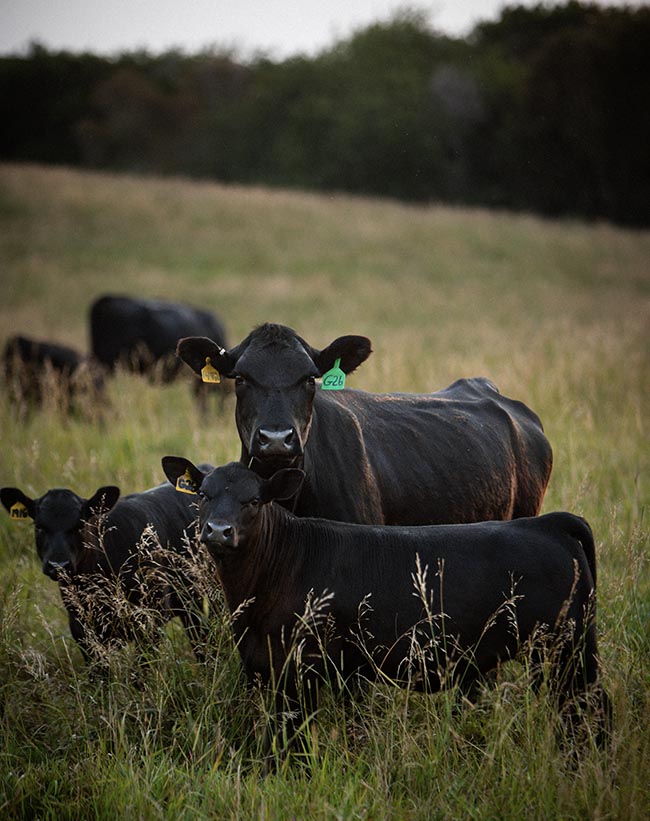
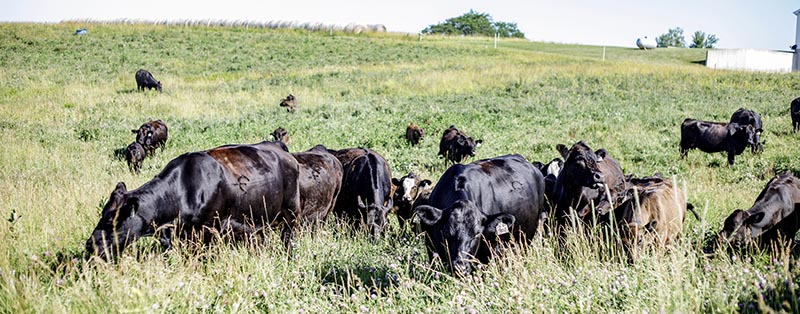
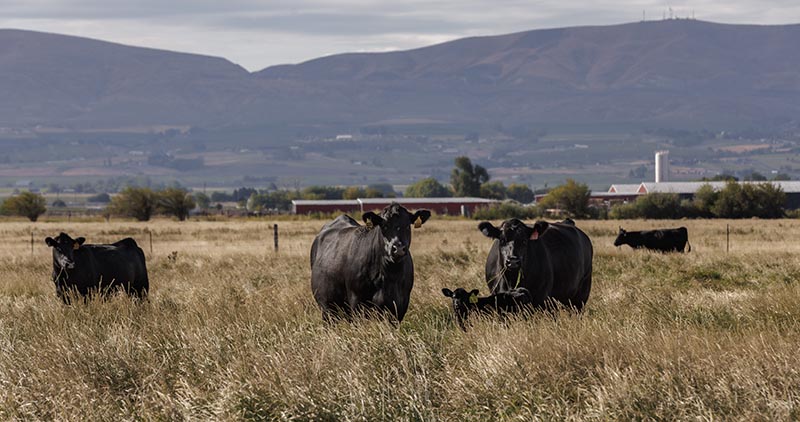
Cow productivity should be evaluated over time and in the context of the production system. Opposite: Cow productivity and profitability always hinges on input costs.
Don’t Forget the Cow behind the Calf
In commercial cow-calf settings it is easy to focus on the calf because the calf is marketed and is a primary revenue source. But the cow herself is consuming resources every day of the year. Mature cow weight, body condition scores, and feed intake measurements can help producers understand the feed inputs required to maintain the cow herd.
Cow size is particularly important. Two cows may wean calves of similar weight, but if one cow requires substantially more feed to maintain herself, those cows are not equally efficient. Larger cows can have greater production potential, but they also generally have greater maintenance requirements. The important question isn’t simply, “How much does her calf weigh?” It is also, “What did it take to keep this cow productive?”
Measuring Pounds of Calf Weaned
Per Cow Exposed
One of the most useful measurements for evaluating herd productivity is pounds of calf weaned per cow exposed. I was trained in reproductive physiology, and my mentor, Dr. Les Anderson, instilled in me the importance of pounds of calf weaned per cow exposed, as this metric combines calf performance and reproductive efficiency of the cow herd. It goes beyond looking at conception rate, pregnancy rate, calving rate, and weaning rate individually. Rather, pounds of calf weaned per cow exposed provides an opportunity for a bigger picture overview on the performance of a cow herd.
The calculation is simple:
Total pounds of calf weaned ÷ number of cows exposed
For example, consider two herds that each have 100 cows.
Herd A exposes 100 cows. Ninety calves are weaned at an average of 600 pounds.
90 calves × 600 pounds = 54,000 pounds weaned
54,000 ÷ 100 cows exposed = 540 pounds per cow exposed
Now consider Herd B. They also expose 100 cows, the average weaning weight is higher at 675 pounds, BUT the herd only weans 75 calves.
75 calves × 675 pounds = 50,625 pounds weaned
50,625 ÷ 100 cows exposed = 506 pounds per cow exposed
Herd B has the heavier average calf, but Herd A produces more pounds of calf per cow exposed because of its increased reproductive performance. I recognize this example may seem extreme, but it helps illustrate the importance of looking at the bigger picture. Again, this measure is valuable because it combines reproduction and calf growth into a single number. It is not a complete measure of profitability, because it does not account for the additional costs associated with achieving greater output. But tracking the number over time can provide a good indication of whether changes in genetics or management are actually increasing herd productivity.
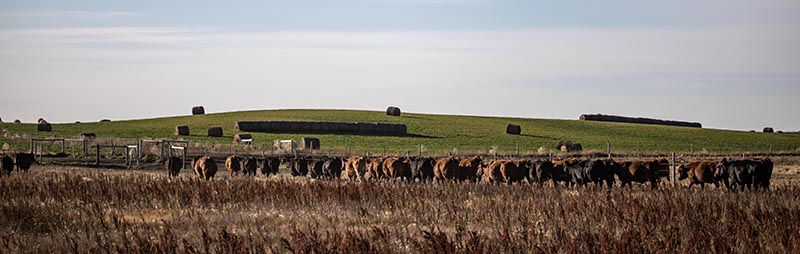
There is no single measurement that defines the ideal beef cow. Evaluating what matters most for an individual operation is critical. Opposite: Due to the variability of operations, performance needs to be measured relative to the system in which cattle are expected to perform.
Other Metrics
for Productivity and Performance
The example above demonstrates how pounds of calf weaned per cow exposed provides more context of the performance of a cow herd compared to an average weaning weight alone. But what are other ways, likely uncommon ways, that we can measure cow or land productivity? We could evaluate the pounds of calf weaned per pound of cow exposed. For example, let’s say we have ten cows that weigh 1,500 pounds on average and they wean nine calves with an average weaning weight of 600 pounds.
9 calves × 600 pounds = 5,400 pounds weaned
10 cows × 1,500 pounds = 15,000 pounds of cows exposed
5,400 pounds weaned ÷ 15,000 pounds of cows exposed = 0.36 pounds of calf weaned per pound of cow exposed
Pounds of calf weaned per acre is a metric that can be used to analyze the productivity of a farm or ranch. Many of us deal with land constraints daily and it’s a real, continual problem for production agriculture. Let’s say we have a 50-acre farm and we use the same nine calves in the previous example.
5,400 pounds of calf weaned ÷ 50 acres = 108 pounds of calf weaned per acre
At the recent Fall Focus Symposium, Drs. Ryan Rathmann and Troy Rowan shared information in their presentations on cow size and its impact on productivity, stocking rates, and ultimately profitability. One of the interesting pieces in their presentation was modeling a fixed land base. In other words, they didn’t assume that they had more acres to graze or feed resources available just because the cows in their model got bigger.
The All-Purpose Index ($API) is a powerful tool provided by International Genetic Solutions that is used when retaining replacements and is an expression of dollars per cow exposed. One of the unique attributes of the All-Purpose Index ($API) is that it uses a fixed land base for the modeled cow herd. Essentially, if the cows get smaller you can run more of them, and if they get bigger, then you can run fewer of them.
Genetic Tools Available
and the Importance of Data
Once producers know what they want to improve, genetic tools can help move the herd in the desired direction. Expected progeny differences, economic indexes, genomic information, and individual performance records provide different pieces of the puzzle. Traits such as calving ease, stayability, mature weight, weaning weight, average daily gain, feed efficiency, and carcass merit can all contribute to selection decisions.
Collecting, analyzing, and submitting these phenotypes on entire contemporary groups is especially important data that fuels the genetic evaluation. Similarly, cow removal or culling records can add another important layer of information. If cows consistently leave the herd because of reproductive failure, foot and leg problems, udder issues, inability to shed, disposition issues, or poor calf performance, those records can identify opportunities for both management and genetic improvement.
Genetic evaluations predict differences in genetic potential. On-farm records demonstrate how cattle actually perform within their environment and management system. The combination is powerful: measure performance, identify the traits that are important to you, and use genetic selection to create the next generation of cattle capable of meeting those goals.
You Can’t Manage
What You Don’t Measure
There is no single measurement that defines the ideal beef cow. A productive cow must first reproduce. She must raise a valuable calf. She must do so without requiring excessive resources. And she must repeat that process every year for many years.
Producers don’t need to collect hundreds of measurements to improve their herd. Start with a few numbers that directly relate to the operation’s goals and record them consistently.
At a minimum, consider tracking:
1. Pregnancy status — Did she become pregnant?
2. Calving status and date — Did she calve and when?
3. Calf weaning weight — How much did she produce?
4. Mature cow weight — What does it take to maintain her?
5. Cow longevity — How many years does she remain productive?
The answers to those questions provide a much more complete picture of cow performance. From there, producers can calculate pounds of calf weaned per cow exposed, pounds of calf weaned per pound of cow exposed, and lifetime productivity. The key is consistency. A single year’s data may be interesting, but several years of records can reveal trends and separate true differences from environmental noise.
For commercial producers, the goal is not simply to produce more pounds. It is to produce more valuable pounds from every cow exposed, using the resources available and maintaining a cow herd that can remain productive for years to come. The best cow isn’t necessarily the one that produces the biggest calf. She is the cow that consistently and efficiently converts the resources available to her into a marketable calf, breeds back quickly, calves early in the calving season, and does it profitably — year after year.