by Rose Oie
The American Simmental Association’s 2026 Fall Focus brought ASA members, staff, and trustees together in Bozeman, Montana, August 28 through September 1. Over the five days, attendees moved through mixed farm tours, a full day of industry ducation, a recognition dinner with some real breed history in the room, and the ASA Board of Trustees fall board meeting.
Fall Focus opened Friday with tours of Montana State University and the Bozeman Agricultural Research and Teaching (BART) Farm. The BART Farm tour gave attendees a look at the research, teaching, and Extension work taking place on the 474-acre facility, including the Steer-A-Year program, virtual fencing systems, Calan gate facility, and SmartFeed system.
The night continued with a social hour and dinner at ASA headquarters. For many attendees, the evening offered an opportunity to see where the Association’s daily activities take place. Saturday’s Educational Symposium covered a wide range of topics, but the conversations consistently came back to a question that producers face every breeding season: How can genetic and industry information be used to make better decisions in the cow herd?
Saturday morning began with a look back. Moderated by former ASA Executive Vice President Dr. Jerry Lipsey, “A Reflection on Defining Moments in Simmental History,” brought breed pioneers together to discuss the decisions and turning points that helped shape Simmental in the United States. The value of the session was not simply in revisiting dates or accomplishments. The people involved were able to explain why certain decisions mattered at the time and how those choices influenced the direction of the breed. It gave attendees a chance to hear parts of Simmental history directly from people who helped shape it.
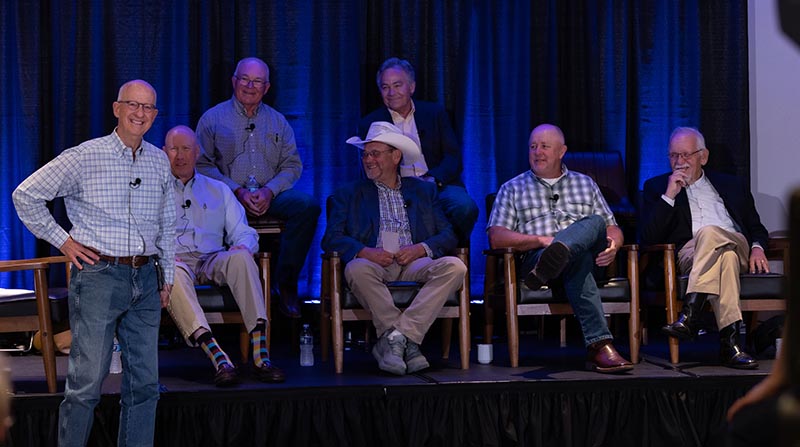
A highlight of the event was past ASA EVP Dr. Jerry Lipsey’s history panel.
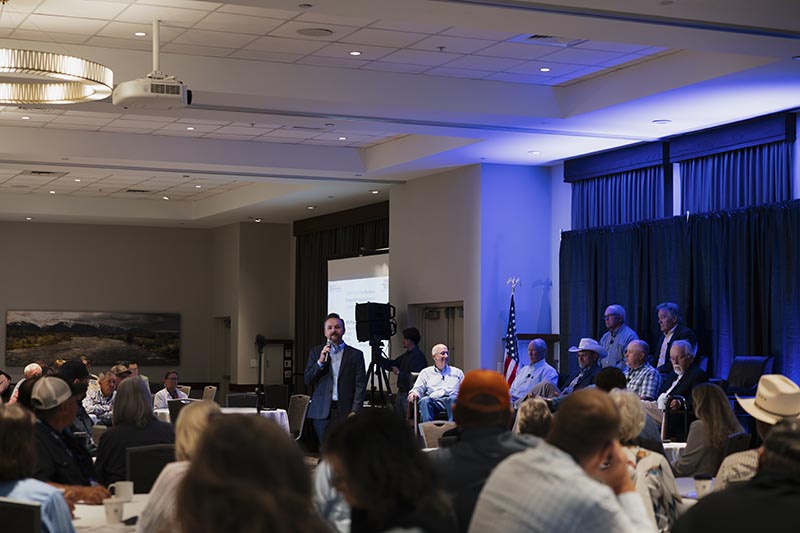
From there, the symposium took off with insights from guest speakers. Dr. Dale Woerner of Texas Tech University opened the first technical session with “Red Meat Yield: A New Era,” addressing the continued importance of understanding carcass value and yield grade. Dr. Andrew Griffith, a livestock economist at the University of Tennessee, followed with a discussion of beef demand, consumers, and the economic outlook facing the industry. The two joined Dr. Jon DeClerck, ASA EVP, for a roundtable discussion before lunch, giving attendees an opportunity to continue the conversation beyond the presentations.
After lunch, attention turned to International Genetic Solutions (IGS) and the tools available to ASA members. Dr. Ryan Boldt discussed updates to the IGS Multi-breed Genetic Evaluation and new trait development, while Dr. Elizabeth Dressler focused on practical application for ASA members. Dr. Jackie Atkins joined Boldt and Dressler for a panel discussion that allowed the technical information to move into questions about how breeders can successfully use it in their own programs.
Dr. Ryan Rathmann focused on female selection and what cow efficiency looks like from the commercial producer’s perspective, using mature cow size, milk production, and forage resources to show how breeding decisions can affect profitability. Dr. Troy Rowan followed with “More Than Just a Weight: The Complex Challenge of Breeding More Efficient Cows,” covering closely related questions about cow size, body capacity, and efficiency. Both presentations challenged breeders to consider how the cow fits her environment and how genetics can help producers make the most of the resources they have.
For longtime Fall Focus attendee Bruce Holmquist, that kind of information is exactly why producers continue to make the trip. Holmquist has attended the event for years, dating back to a gathering in Kansas City in 2002, before it carried the Fall Focus name. He said attending provides an opportunity to see the amount of information available to seedstock producers and breeders, information that not every producer takes advantage of.
“The people that take advantage of it are in the top 5% for awareness, education, and knowledge about genetic improvement for the industry,” Holmquist said. “That’s something that differentiates the people who attend this from the rest of the crowd.”
Holmquist also touched on the importance of keeping the commercial producer at the forefront of breed improvement. “I think it goes back quite a few years, and I hope it continues, but it’s the understanding that the customer of the American Simmental Association and all breed associations is the commercial producer,” he said. “It’s the commercial beef producers that put meat on the plate. We need to do it more efficiently and create more profitability in that area.
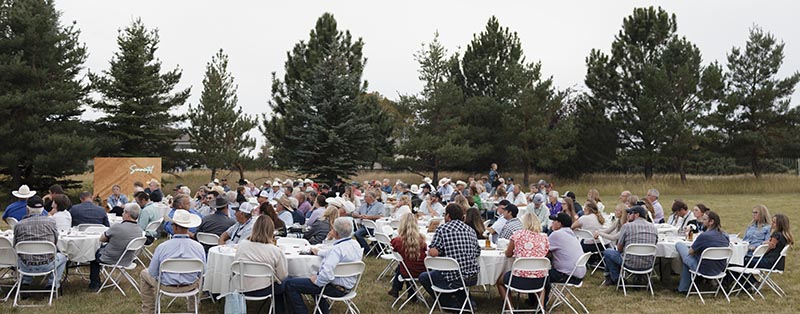
That perspective connected several of Saturday’s presentations. Saturday evening shifted the focus from education to recognition as attendees gathered for the recognition dinner. John B. Collier of Stephenville, Texas, and Gibbs Farms of Ranburne, Alabama, were recognized with World Simmental-Fleckvieh Federation Golden Book Awards.
Collier played an important role in the early development of Simmental in the United States. Gibbs Farms has spent decades developing Simmental and SimAngus cattle while collecting data from its herd to support genetic improvement. The evening also recognized Doug Parke of Paris, Kentucky, and Jim Butcher of Lewistown, Montana, with Lifetime Promoter Awards. Both have contributed to the breed through breeding goals, leadership, and promotion. Butcher’s family has an especially long connection to Simmental, having bred Herefordcows to Parisien, the first Simmental bull in North America, in 1968.
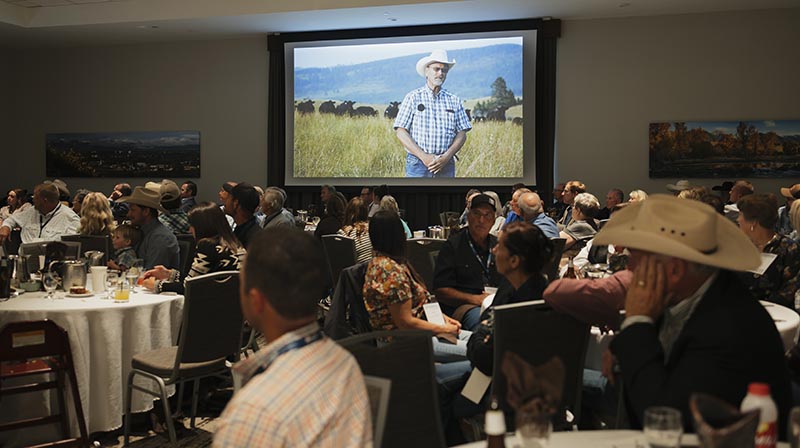
Attendees gathered to recognize the WSFF Golden Book and ASA Lifetime Promoter recipients.
With the educational and recognition portions of Fall Focus complete, Sunday morning brought attendees into the Association’s board meetings. The Town Hall opened the day, followed by committee meetings covering Activities and Events, Breed Improvement, Growth
and Development, and Policy and Procedures. The meetings provided an opportunity for members to hear updates, ask questions, and participate in discussions with trustees and staff.
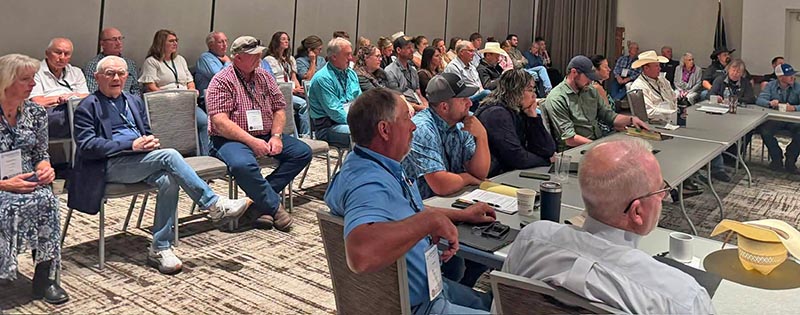
ASA hosted an open Town Hall, allowing members to voice their questions, ideas, and thoughts to the ASA Board of Trustees and staff.
The ASA Board of Trustees then met Sunday afternoon and continued through Monday and Tuesday morning. Committee reports, financial and Association reports, directives, and resolutions were addressed, followed by voting on Association business before the meeting adjourned Tuesday morning.
The open board meeting gave members the opportunity to ask questions, interact with the ASA Board of week full of history, food for thought, and new breed improvement make the trip well worth it, putting producers in a room where they can ask questions and talk through what it means for their own operations.
As the 2026 Fall Focus came to a close, attendees left Bozeman with new information to consider and conversations to continue for a better understanding of the work taking place across the Association and the beef industry.