by Lilly Platts
Current chairman of the American Simmental Association Board of Trustees, Ryan Thorson, discusses his Simmental story and leadership role.
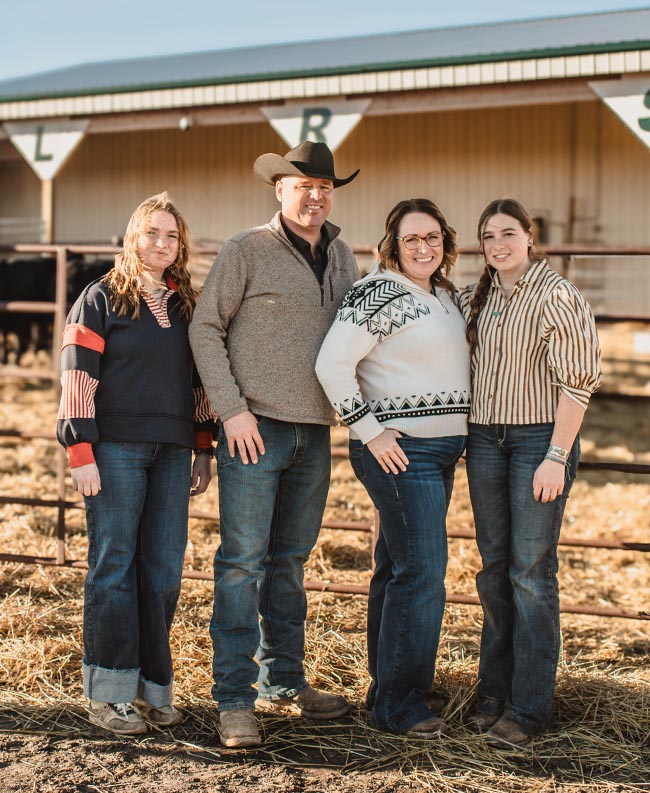
Ryan, Sarah, Grace, and Harper Thorson.
Platts: What has been the effect of Total Herd Enrollment (THE)? What is the impact of Performance Advocate recognition?
Thorson: Accuracy. Accuracy is the number one reason for THE, because it allows ASA to get data on all of the animals in a herd, and not just the ones being registered. It is hard to have an accurate genetic evaluation with only part of the data. In 2025, roughly 20% of the entire membership was enrolled in THE. However, THE herds submitted over 80% of all the data to the Association, highlighting the impact of the THE program. THE is one of the best programs offered to our membership. However, it is not for all operations, and staff routinely works with members to see if it is the right fit.
A very small percentage of our members qualify to be a Performance Advocate. It is difficult and very time-consuming to collect data on all the traits to meet the requirements to become a Performance Advocate. Phenotypic data is possibly the most valuable asset we can get as an Association, and it’s the hardest to get. As we continue to add new traits, this program requires evaluation to see if any changes need to be made to the number of traits submitted to qualify. With that, we need to continue to recognize the members that are achieving the highest rates of data submission.
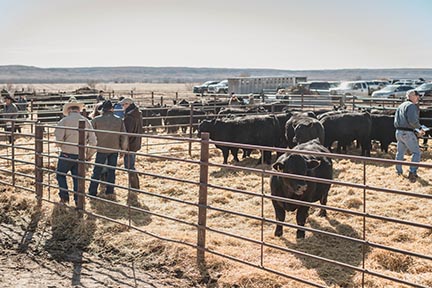
LRS holds an annual sale in February, featuring their range-raised SimGenetics bulls.
Platts: How has ASA’s Progress Through Performance (PTP) program contributed to breed improvement?
Thorson: Personally, I believe that the PTP program is not providing the impact that it probably had when it was originally implemented, with the goal of trying to keep the show ring connected to the commercial cattle industry. Over time, and as the industry and show ring have changed, the true merit of the PTP show has probably diminished as simply the two worlds are probably farther apart than they once were. With that said, it is still a great program to provide data on the animals that are entered into the PTP shows, and we can allow people to do with it how they see fit. The Phenotype and Genotype shows that were approved to begin at the AJSA Regional Classics this summer, and hopefully at future National Classics, will easily replace what I believe the true intention of the PTP program was when it was started. It will be accomplished through a different approach, and will probably just stay at the AJSA level for some time.
Platts: As a producer who has utilized DNA testing and genomic technology for some time, what is the impact you have seen?
Thorson: Genomics has had an extremely large impact on the industry. This impact has probably been more visible on the commercially focused side of the business than some other segments, but there is no question the progress is only getting started. From an Association standpoint, we have been able to implement many great programs to assist our membership to take advantage of this new technology, including the Cow Herd Roundup, Calf Crop Genomics, and the Carcass Expansion programs. In just three years we have almost doubled the number of genotypes that are being used in the evaluation — it is not hard to see a trend line of what is happening in the industry. I know it is a topic that can cause some angst in our membership, and it has been the number one factor in my opinion of what has been driving competition from the private sector into the traditional space of a breed association, but it is here to stay, and our job as a board is to ensure we are utilizing it in an approach that is benefitting our members so they do not need to, or want to, go elsewhere. Phenotypic data is still key to making genomics accurate, and they need to continue to go hand in hand as one without the other does not work.
Platts: What is the impact of the American Junior Simmental Association (AJSA)?
Thorson: The AJSA is a great youth organization. It helps build a great foundation for our next generation of leaders, not only in the Simmental breed, but for our communities at home and our nation. Both of my children have had the opportunity to be a part of this great organization, and whether it is the life skills that they are learning through the educational contests, the friends they meet, or the networking that is happening, the impact has been significant. There is a lot of competition for kids’ time today, whether it is sports, dance, jobs, or cattle, and if we can get them connected to the Simmental breed at a young age, there is opportunity to keep them a member of our Association as they get older.

Platts: How vital are strong state associations to the overall welfare of SimGenetics?
Thorson: State associations are the grassroots of the ASA and our members. They are very important for spreading the message of SimGenetics across the country, and supporting the local members. Many of our great state associations are the stepping stones for our board members at the national level, as well as a great support system and encouragement for our youth to get involved in the AJSA. The ASA has a great program in place via the Cost Share program to help our state associations promote SimGenetics close to home.
Platts: How secure is the Association from a financial standpoint?
Thorson: Financially the ASA is in a great spot. We have been profitable from a cash flow standpoint for many years now, but also thanks to previous boards and leadership, we have been able to grow a reserve fund through our investments. Again, through prior leadership at the ASA and the hard work of past boards, this has all happened without raising the many costs over the years to our membership, which is to be commended. It goes without saying that the rise in the acceptance of SimGenetics in all facets of the industry is the number one factor that puts us in the position we are in today.
Platts: How important is it for ASA members to be involved in the decision-making process, through voting and attendance at local, state, regional, and national meetings?
Thorson: Get involved, be involved, and stay involved. It is a challenge to find time today, no matter what the organization is, but there is no better reward than serving others. This could be through 4-H or FFA, coaching, local boards, state associations, or the ASA. Most of our board meetings are open to the public, and all of us board members are available and willing to take your calls to listen to your ideas, thoughts, criticisms, and hopefully a few compliments as well. A small percentage of our membership votes in our annual elections. You have a say as a member, and I would encourage everyone to take advantage of it.
Platts: How does the Association support the membership through education, resources, etc.?
Thorson: Education is a strong foundation at the ASA, and there are many opportunities throughout the year. Fall Focus is one of the biggest opportunities, and it coincides with our fall board meeting. The SimGenetics Training for Young Leaders and Entrepreneurs (STYLE) program is a great option for our younger adult members. The IGS Youth Leadership Summit, and the Steer Profitability Contest are a couple more. Our staff is always looking for ways to connect with our members either in person, or through media channels like IGSTV on YouTube.
Platts: During this time where people are increasingly reliant on the Internet and electronic communication, what do you perceive as the future for ASA Publication?
Thorson: This is a million-dollar question, and one that many organizations are facing, not just the ASA. I still like to receive my Register magazine and SimTalk in print, but know that I might not be in the majority for much longer. I think the big question that will drive some tough decisions in the future is where our membership is going to allocate their advertising dollars. There are so many options available in today’s marketplace, and many of them are free options via social media, or more direct to customers as opposed to a shotgun approach, like a national publication. It will be extremely important for the Publication staff, Publication Board, and the ASA Board to be proactive and not reactive to the changing environment. It is not a matter of if it will change, but how we make changes and get ourselves in position to be on the front end. I believe we need to look at creative ideas where our team can be the catalyst for our members’ marketing programs, combining some more traditional print media with all the digital and social media opportunities available in today’s world. The bottom line is that we have to make sure what we are doing is adding value to our members’ operations, or they will look elsewhere.
Platts: What are the historic and current strengths of this organization and our cattle?
Thorson: Simmental cattle have evolved and changed throughout the years from when they were first imported to the USA, from being on the do-not-buy list, to once again being as commercially accepted in the industry as any breed available. The greatest strength of not only our Association, but our cattle, is our ability to adapt and change to meet the times. It is rooted in our mission statement to serve the industry, and if we keep that as our focus, the ASA will continue to be strong and our cattle will have a place no matter what segment of the industry our membership is in.