by Lilly Platts
As the Simmental breed gained footing in the United States, breeders in the South quickly saw an opportunity to cross the breed with Brahman. The cross was successful, with breeders soon marketing composite bulls to commercial producers. The Simbrah composite became a part of the American Simmental Association registry in 1977.
When Simmental semen became available in the United States, breeders throughout the country started experimenting with a variety of crosses. In the South, many saw an opportunity with Brahman cattle. Straight Brahman, or Zebu, cattle have long been a popular choice in areas where heat, humidity, drought, and other harsh conditions present challenges. Zebu cattle are the most populous in the world because of this hardiness. While survival is always the number one priority, these cattle usually lacked growth, milking ability, fertility, and other economically relevant traits. Simmental offered a solution to this, with the added benefit of heterosis.
One of the names most commonly associated with Simbrah cattle is Sally Buxkemper. Early on, Buxkemper identified the need to ensure that Simbrah cattle were meeting carcass standards. She developed her herd using the Brahman bull “Red Jake Manso 19,” a Performance Registry International Certified Meat Sire. Buxkemper was a leader in the breed, serving on the ASA Board of Trustees, and her influence helped establish the standards for Simbrah cattle. Today, carcass traits continue to be a focus for Simbrah cattle, with many leading breeders currently focused on making sure the composite performs in the feedlot.
Other early breeders of Simbrah cattle included Texans Edmund Tom, Bud Wentz, and Rob Brown. In the early years, the Simmental-Brahman cross cattle were largely experimental, but as these producers started seeing success, they focused on refining the genetics. With a new market opportunity and desire to sell seedstock, these breeders also started looking for a registry.
Bud Wentz approached ASA about developing a registry. The Association was receptive, and he formally presented his case to the ASA Board of Trustees in 1975. Calling the cross “Brahmental” at the time, Wentz appealed to the Board during the January Annual Meeting. resident [Chairman] Lou Chestnut appointed an exploratory committee, which included Rob Brown, Colville Jackson, Bobby Lawrence, and Jess Kilgore.
The committee drafted potential guidelines for registration, including breed composition. The Board approved the addition of the composite in 1977. The name “Brahmental” was used for two years, but was changed to Simbrah after a producer in Texas claimed ownership over the term. The Association and Board chose not to fight the claim, changing the name to Simbrah.
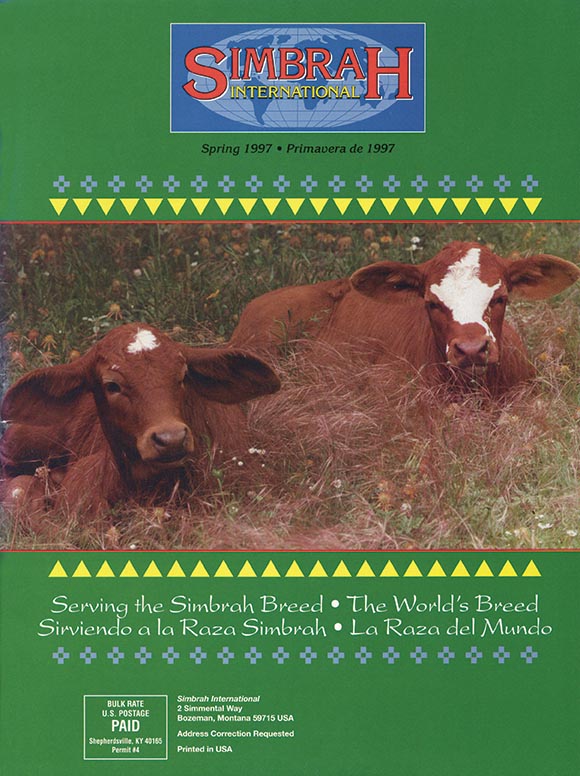
Simbrah International was printed both in English and Spanish to target an international audience.
With a registry in place, Simbrah breeders now had a framework for data collection, pedigree management, marketing, and more. The inclusion of Bos indicus composite cattle also opened up opportunities abroad, with these cattle being especially fit for other parts of the world like Mexico, South America, Australia, and beyond.
The ASA Board of Trustees added an official Simbrah committee in 1988 to better assess policies, rules, promotion, and other Simbrah-specific matters. This committee continues playing a critical role within the Board.
In 1987, the ASA published the first Simbrah Sire Evaluation. Several publications were also developed to promote Simbrah cattle, including Simbrah International and American Simbrah. These publications also targeted international audiences, and were published in other languages for a time. These Simbrah-specific publications were published for a number of years. Publications like Simbrah World, published by Southern Livestock Publishing, continue sharing Simbrah sale results, news, stories, and more.
Today, the Simbrah breed is an important part of the ASA registry, with the largest number of producers residing in south Texas. While the breed is best known for its ability to thrive in hot environments, producers have also seen success in colder climates. Simbrah cattle are on display at shows across the nation, and are offered at production sales throughout the year.
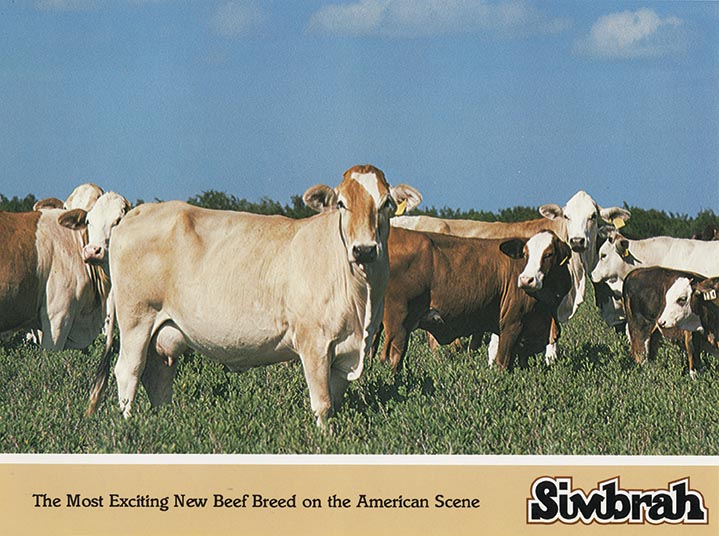
An early ASA advertisement promoting
Simbrah cattle.