How the AJSA Shapes Industry Leaders
by Chloe Tolar
Chris Ragland grew up showing Simmental cattle in Magnolia, Kentucky.
He served as president on the AJSA Board of Trustees and was heavily involved in 4-H and FFA. Pursuing a career initially in pharmaceutical sales and most recently in data and analytical services, Ragland has continued to use and expand on the skill set he built at a young age.
Editor’s note: This is the fourth article in a series highlighting the significance of the AJSA in Simmental breeders’ lives.

Tolar: How did your time with the AJSA inform your career decisions?
Ragland: My original plan was to pursue a career in leadership at ASA. I attended the University of Kentucky, studied agricultural economics and finance, planned to attend law school, and then head to Bozeman, but a family bankruptcy occurred, and I needed to get a job. I had taken an internship with a pharmaceutical company the summer of my senior year, so instead of going to law school, I pursued a full-time position in animal health sales. I took a territory in Nashville, thinking I would do that for a couple of years and then go back to school and ultimately pursue my plans to work in Bozeman. But, as they say, life happened, and I wound up on an entirely different path that ultimately kept me close to animal agriculture, but in the role of a supplier rather than as an Association executive as I had planned.
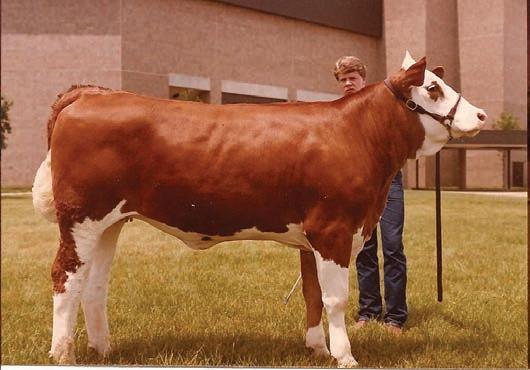
Ragland grew up showing Simmental cattle, attending many AJSA National Classics.
What makes the AJSA unique?
What I enjoyed most about all my youth experiences within 4-H, FFA, and AJSA was the competition, teamwork, and meeting people all over the country. But truly, the best part was always the cattle. Working with and being around cattle, and particularly Simmental cattle, for me was always the most rewarding part of that experience, and I suspect that may have been true for a lot of other youth as well. That said, the opportunities to travel were very impactful. Participating in AJSA allowed me and my family to travel to Kansas City; Columbus; Springfield; Tulsa; Bozeman; and even Pasco, Washington, in one year. As a teenager, these were very special learning opportunities to experience new places and to navigate the challenges associated with traveling. The AJSA was the first board position I ever held, and I appreciated being exposed to that type of responsibility. The time on the board was an excellent learning environment. As a young person put in the position to think about how to drive membership and engage with youth across the country, we worked together to accomplish something on a national scale. It was a formative experience for me and something I believe can be very valuable for teenagers interested in building those types of life skills and experiences.
What was most memorable about your experience?
The first National Classic I attended was in Kansas City in 1978. I believe that was the first year for the event, so the format was something new for everyone, and we didn’t really know what to expect. As I recall, the basic competitive events were all there: heifer show, showmanship, the herdsman’s quiz, and a judging contest, all of which I really enjoyed. At the banquet, they began calling out winners, and I was fortunate to have done pretty well and take home some hardware that evening. The whole experience was great for my family and me, so we kept going back, and I decided to get more involved in the organization, including board participation. Over the six years from 1978 to 1983, I was fortunate enough to win the overall a couple of times, including 1983 in Louisville, which was the year I concluded my term as AJSA president. That was the same year I received my FFA American Farmer Degree, so those two events really made that a very special way to bring my “youth” career to an end. What is great, however, are the things you learn, and the lasting relationships you make; they continue through adulthood and your professional life. One example for me occurred 30 years later in 2013 in Portland, Maine. I was conducting an industry overview with about 15 executives for a pharmaceutical company, and there was one person on the other side of the room that I was certain I knew, but I did not know how or from where. When the meeting wrapped up, I walked over to speak with her, and she quickly cleared up the mystery. We met in Louisville in 1983 at the AJSA National Classic. Her family was from Pennsylvania, and she had pursued a career first in veterinary medicine and then moved over to the pharmaceutical sector. It was a very happy accident, and we’ve been good friends ever since.
Of my time in AJSA, I would say we always had great experiences at those events. We were very lucky to have had Patsy Houghton as our youth director. She did a fantastic job putting the Classic and other events together, and always made sure those programs offered both fun and excellent learning opportunities. Patsy led our board meetings, and I believe she deserves credit for building a very strong youth program. I am still impressed today when I think about how well things were run and how much I enjoyed my time in the organization.
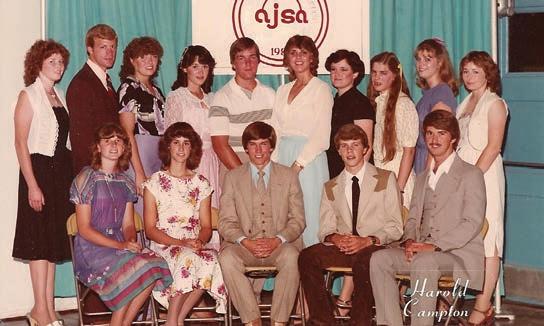
Ragland had many accomplishments throughout his time in the AJSA.
What are some skills you gained in your time as a junior?
The ability to speak publicly, to advocate for yourself and your ideas, and the ability to influence a group of people or move them in a certain direction in support of an idea or concept are essential life skills. The AJSA and other youth organizations offered me very valuable opportunities to develop those skills. Today, I believe many young people do not feel comfortable advocating for themselves or speaking publicly, and I hope this is still part of what the AJSA experience offers to its members.
Teamwork was another important element of our AJSA experience. We were lucky to have strong adult leaders and coaches to help us understand that while team dynamics are not always easy, there is a lot of satisfaction and power that comes from working together to achieve a common goal, something bigger than just you and what you can accomplish alone.
Another valuable lesson is that life isn’t fair. Life is just life, and you will always be competing against someone who is a better speaker, has more money, more resources, or some other type of advantage. Finding ways to compensate for those disparities is important. If you want to compete and you know public speaking is a weakness, practice, train, and find ways to test and challenge yourself. You can be better. You just have to decide what you want and then make it happen. It’s good to understand this sooner rather than later in life. These are each valuable lessons and experiences that I took from my time with the AJSA.
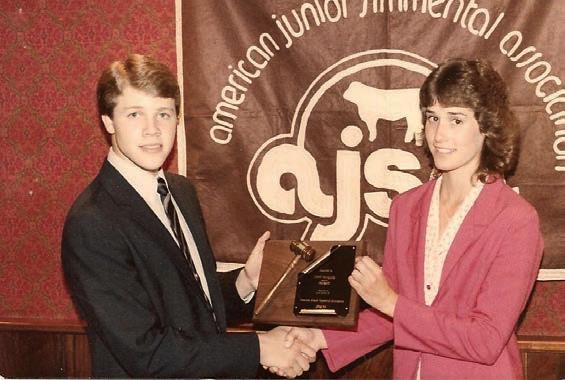
Ragland served as President of the AJSA Board of Trustees.
Do you have any advice for a young person who is stepping into their first job or career?
One of the most important aspects of my professional career has been the ability to speak publicly, and again, I believe this should be a major focus for anyone beginning their career track. If public speaking makes you uncomfortable, you need to put yourself in situations where you force yourself to become not only comfortable, but confident. If you can, you need to develop that skill. Being able to go into any room and have an intelligent conversation and be comfortable doing it is extremely important for career advancement in many different types of professions.
Also, when you join a company, learn everything you can about that business and the industry you’re in. I was fortunate to have had the opportunity to take on several different assignments with my original employer. I took on a variety of challenges and different areas of responsibility, which allowed me to learn about the business from several unique perspectives. In those roles, I looked for and found different ways to be helpful and contribute. This knowledge and experience created a variety of opportunities for advancement, including overseas assignments and ultimately executive and C-suite positions in multiple companies.
In your career and in your life, you want to create degrees of freedom, options from which to choose, to build the best life you can for you and your family. The more you learn, the more challenges you take on, and the more robustly you build your skill stack, the more degrees of personal freedom you will create. Be sure to do this with a plan. Don’t spend all your time jumping from place to place. Look for an environment where you feel challenged, where you are actively learning new skills, and, ideally, a place where you feel the management has a genuine interest in your professional development. If you find this setting, dig in and make the most of that opportunity.
Another point I would share is the need to have an honest and realistic assessment of your strengths and your weaknesses. People can fool themselves into thinking they’re better or worse at certain things than they really are. People can be overly critical of themselves and ultimately walk away from all types of opportunities because they were too harsh on themselves. The opposite can also be true. You have to find that balance of being not too hard and not too easy on yourself. Finally, try new things. My career path changed drastically in 1989 when I became the first person in my pharmaceutical division to be assigned a laptop computer. When I asked my boss why me, he said: “Because you’re the only one in the marketing team that can type.” Because I had taken a typing class ten years earlier, I was handed a piece of equipment that would change my life. Fast forward 37 years, and I am now an owner and CEO of one of the largest animal health data and insight services companies in North America, all made possible because I learned to type in the tenth grade. It’s a perfect example of how you never know what skills will open the door for your next great opportunity. .