by Dr. Jon DeClerck, ASA EVP
If there is one word that defines the cattle business right now, it is opportunity. After several years of drought-driven liquidation and supply chain disruption, the US beef cow herd now sits below 28 million head, the smallest inventory since the early 1960s. At the same time, cattle prices are not just strong, they are setting records. The signal from the marketplace is clear: there is real opportunity for expansion.
But this rebuild will not look like the last one. Elevated interest rates and drought uncertainty are slowing expansion, but they are also creating an opportunity to rebuild more deliberately. Producers now have the tools to make smarter genetic decisions than ever before.
Over the last six decades, carcass weights have climbed by roughly 4.8 pounds per year, enabling three steers to now generate the amount of red meat that once required four. But mature cow size has also climbed roughly 7.7 pounds per year, bringing higher maintenance requirements and long-term cost implications (Peel, 2024).
The next rebuild will not be about replacing numbers. It will be about producing more beef with fewer cows. That means capturing growth where the market rewards it while maintaining cows that fit real-world production systems.
The sustainability of the next cattle cycle is being written in the breeding decisions made today, and those are exactly the conversations that will take center stage at Fall Focus 2026.
Efficiency Still Pays
The appeal of larger cows is understandable. In many seedstock systems, bigger cows often generate the growth-oriented sires that command a premium on sale day. But for commercial cow-calf producers operating in forage-based environments, the economic reality can be very different.
Research helps quantify that trade-off. Lalman et al. (2019) reported that each additional pound of mature cow weight produced only about 0.06 lb. more calf weaning weight. In practical terms, a cow that weighs 100 pounds more at maturity may wean just six additional pounds of calf, often not enough to offset the added annual forage required to maintain the larger female, even during historically strong calf markets.
Larger cows consume more forage, increase winter feed costs, and reduce management flexibility during drought cycles. Moderate-framed cows, by contrast, frequently wean a higher percentage of their body weight and tend to remain in production longer.
This balance between performance and long-term efficiency is precisely what the All Purpose Index ($API) was designed to address. During herd rebuilding, selecting replacements that convert forage into pounds of calf, rather than simply increasing mature cow weight, becomes a critical driver of sustainable profitability.
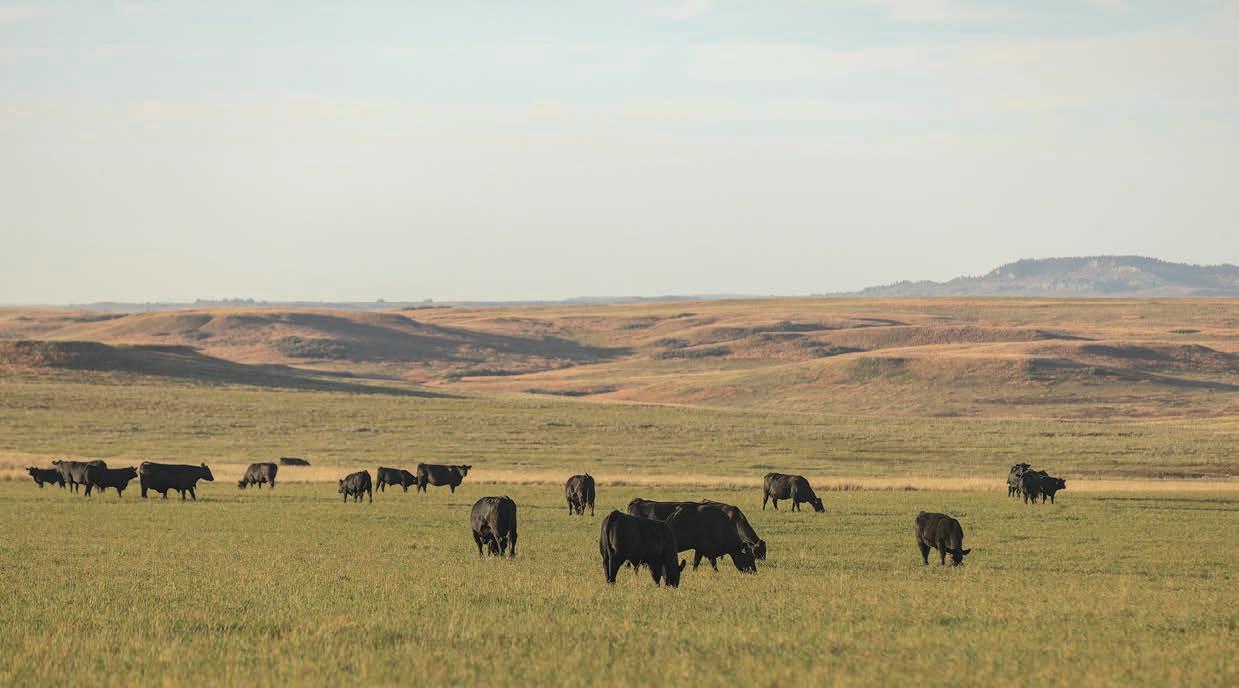
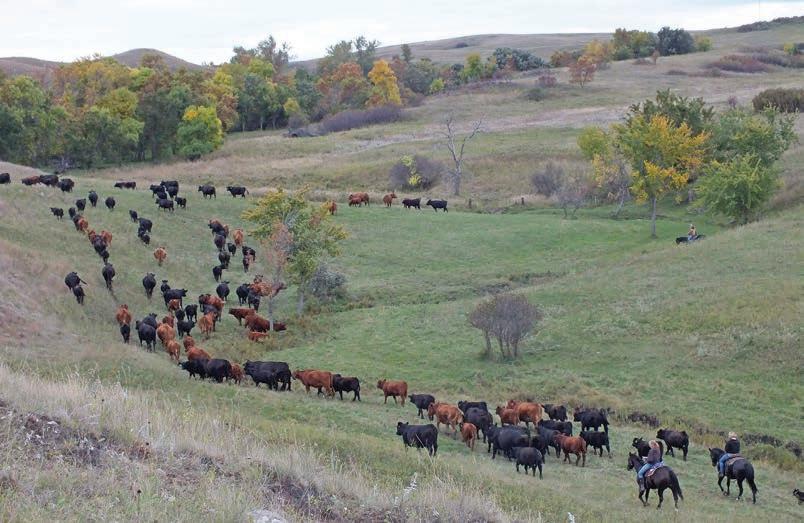
The US cow herd inventory is currently at its lowest level since the early 1960s. Efficiency is more important than ever, with cows being asked to produce more with the same resources.
The Pressure for Growth Is Not Going Away
Meanwhile, downstream market forces continue to reward added performance. One of the most consequential shifts in modern beef production has been the rapid rise in fed cattle carcass weights. With hot carcass weights increasing more than 20 pounds in 2024, and another 24 pounds in 2025, the industry has effectively added nearly one billion pounds of beef annually, the equivalent of harvesting roughly two million additional cattle without expanding the national cow herd (LMIC, 2024).
But added pounds come with biological trade-offs. Genetics that drive carcass performance can also increase mature cow size and long-term maintenance costs if selection is not managed intentionally.
New Traits Allow More Intentional Selection
Today’s breeders have more tools than ever to manage the balance between performance and long-term cow herd efficiency. The release of Mature Weight (MW), Cow Energy Requirement (CER), and Heifer Pregnancy (HP) EPD provide producers with clearer insight into how growth genetics translate into real-world production outcomes.
While growth traits and mature size remain strongly correlated, the relationship is not absolute (Smith et al., 1994). This creates opportunity. The goal is not to avoid selecting for performance, but to manage its long-term consequences more strategically.
Sex differences often matter in how traits are expressed phenotypically. Biologists refer to this as sexual dimorphism. In cattle populations, some lines of genetics may generate more growth in male calves, adding pounds and market value, while producing heifers that develop into more moderate, cost-efficient cows.
In practical terms, this reinforces the importance of balanced selection. Tools like the Terminal Index ($TI) allow producers to emphasize growth and carcass merit where the market rewards it, while MW and CER help ensure retained females remain functional within foragebased production systems. At the same time, HP strengthens the ability to build fertility and longevity into the next generation of cows, critical advantages during a rebuilding phase.
Cattle that rank favorably for both $API and $TI may represent the kind of “curve-bending” genetics needed in today’s industry. Strategic use of these tools allows producers to generate pounds where they are paid for without building cows that outgrow their environment.
Structured Crossbreeding Drives Reproductive Efficiency
Few strategies can improve whole-herd productivity as quickly as structured crossbreeding. At its core, the International Genetic Solutions (IGS) philosophy recognizes that breeds are not competitors — they are crossbreeding partners. When breed strengths are combined intentionally, heterosis becomes a true game-changer.

To learn more about the new Mature Weight (MW), Cow Energy Requirement (CER), and Heifer Pregnancy (HP) EPD please scan the QR code.
Research from the US Meat Animal Research Center shows that crossbred cows can produce 20–25% more lifetime pounds of calf than straightbred females, driven by improvements in fertility, calf survival, and longevity (Cundiff et al., 1992; Ritchie and Troxel, 2007).
High cattle prices make rebuilding easier, but they can also make mistakes more expensive. The replacements retained in this cycle will likely still be in production when the market softens. Producers who leverage heterosis, building herds around reproductive efficiency and longevity, will be positioned to remain profitable, while others may simply be trying to survive.
A Strategic Reset for the Cow-Calf Sector
The drought conditions affecting large portions of cattle country may slow the pace of herd expansion compared to previous cycles. Higher interest rates and forage uncertainty are already encouraging more cautious rebuilding decisions. That may ultimately prove beneficial. This time, producers have better tools and better genetics to rebuild with intention.
The heifers retained over the next several years will shape herd efficiency and profitability for the next decade. Producers who focus on balanced selection, using tools like Mature Weight (MW), Cow Energy Requirement (CER), Heifer Pregnancy (HP), $API, and structured crossbreeding can position their operations to excel in an environment that demands more production from fewer cows.
Rebuilding the national cow herd is largely inevitable. The real question is whether it rebuilds better. That discussion will shape the agenda at Fall Focus 2026, which will be held at ASA Headquarters in Bozeman, August 28 to September 1. .
CattleFax. 2025. Market outlook and price trend commentary. CattleFax, Centennial, CO.
Cundiff, L. V., R. Núñez-Domínguez, G. E. Dickerson, K. E. Gregory, and R. M. Koch. 1992. “Heterosis for lifetime production in Hereford, Angus, Shorthorn, and crossbred cows.” Journal of Animal Science 70:2397–2410.
Lalman, D. L. 2019. “Balancing scale: Matching genetics to forage resources.” Drovers
Livestock Marketing Information Center (LMIC). 2024. “U.S. fed cattle carcass weight trends and beef production implications.” LMIC, Lakewood, CO.
Peel, D. S. 2024. “Why bigger cows aren’t the only reason for record carcass weights.” Drovers
Ritchie, H. D., and T. C. Troxel. 2007. “Crossbreeding systems for beef cattle.” Michigan State University Extension.
Smith, G. M., L. V. Cundiff, and K. E. Gregory. 1994. “Characterization of biological types of cattle. II. Postweaning growth and puberty of heifers.” Journal of Animal Science 72:1962–1977.