by Lilly Platts
Events like Fall Focus and the National Cattlemen’s Beef Association (NCBA) convention bring together experts and industry leaders from across the country.
ASA and International Genetic Solutions (IGS) harness this opportunity to capture educational content, sharing it with the membership and beyond.
The ASA and IGS team collaborated with the Grant Company during the 2026 NCBA Cattle Convention in Nashville, Tennessee, to capture a new series of educational videos. From the basics of DNA to market opportunities, Dr. Jon DeClerck, ASA EVP, and Dr. Ben Crites, ASA and IGS director of Commercial and Industry Relations, lead these experts through topics that are relevant to SimGenetics breeders and the entire commercial industry. The following videos are coming to IGS TV, and will be released in the order of the following summaries. Please scan the QR code below, or go to internationalgeneticsolutions.com to watch the full videos and more.
Dr. Elizabeth Dressler
Expected Progeny Differences and Selection
Dr. Elizabeth Dressler, ASA Lead Geneticist, covers the basics of what an Expected Progeny Difference (EPD) is, selection indexes, and how to use each tool. Seedstock producers are often tasked with explaining how these tools are used in their own operations, as well as how their customers can utilize these figures. Dressler breaks down an example of an EPD, and what it means in a real-world scenario.
Selection Indexes are one of the most useful tools for commercial producers, combining economically important EPD into one simple figure. Dressler also covers accuracy, which is the range of confidence or reliability around an EPD or index. Percentile ranks are another tool for evaluating an animal’s EPD profile, which allow a producer to evaluate an animal on an individual basis. Dressler explains how the IGS Multi-breed Genetic Evaluation supports crossbreeding systems, and what that means both for commercial producers and seedstock providers.
Dr. Ryan Boldt
The Importance of the IGS Multi-breed Genetic Evaluation
Dr. Ryan Boldt, IGS Lead Geneticist, explains the power of having data from multiple breeds in one centralized evaluation. One of the overarching goals of IGS is to bring simplicity to the larger industry. Traditionally, breeds would have individual evaluations, which meant EPD were often on a different base. IGS has changed that, making the data from IGS partner breeds comparable across the board. The IGS evaluation also supports crossbreeding, allowing producers to not only choose the best breeds for their operation, but also directly compare EPD. Boldt explains the power of pooling data, and the longterm benefits of this for producers and the larger industry. This benefit is cumulative, improving genetic prediction over time. The commercial industry is a primary focus of IGS, and Boldt explains the focus on economically relevant traits. Genomics has become an important tool for producers, and Boldt explains both the importance of adding this data to the system, and also why it is still important for producers to continue collecting actual phenotypic data.

Molly Diefenbach and Dr. Elizabeth Dressler
The Power of Genetics and Tips for DNA Submission
Molly Diefenbach, ASA DNA Lead, and Dr. Elizabeth Dressler, ASA Lead Geneticist, cover the role DNA plays in the industry, and share tips for a successful DNA collection and testing process. One of the early benefits of DNA testing was parentage, which allows producers to correct pedigree errors. Since then, genomics have become
an important tool for producers to further support EPD prediction. Genomic testing significantly advances the accuracy of an animal’s EPD profile, allowing producers to have more confidence in their selections. Dr. Dressler explains how DNA testing supports the genetic evaluation.
Diefenbach shares the methods for DNA collection, what the preferred method is, and the process that follows collection. DNA testing is an investment, so understanding how to collect and store samples is essential. A sample that fails because of improper handling not only delays the process, but also adds cost for producers. Submission timelines are also important for producers to consider. Producers may choose to only test their best animals, and Diefenbach and Dressler both explore the value of collecting data and DNA and whole calf crops.
Dr. Mark Anderson and Luke Lind
The Value of Collaboration
Dr. Mark Anderson, executive director of the North American Limousin Foundation (NALF), and Luke Lind, Five Rivers Cattle Feeding, discuss why they have found value in the IGS Multi-breed Genetic Evaluation. The NALF has been an IGS partner for many years, and Anderson explains the value Limousin breeders have seen from pooling data with other breed partners. Progress is faster with more data and broader comparisons, and Anderson has seen significant genetic progress in the Limousin breed. Like other IGS partners, Limousin producers are focused on improving traits that are valuable to the commercial industry.
Lind shares about the progress he has seen in the endproduct quality of beef in the US. Even with the lowest cow herd inventory in decades, more pounds of beef are being produced at the highest quality in history. Prime and choice grade carcasses have been increasing steadily, offering a higher quality product to the consumer. Anderson and Lind cover why being able to predict this quality is so important in the modern-day market. The cost of feeding cattle is high, and margins can be low, so knowing that an animal is going to perform and grade is more important than ever.
Dr. Ken Odde
The IGS Feeder Profit Calculator
Dr. Ken Odde, a longtime Simmental breeder and ASA partner, explains what the IGS Feeder Profit Calculator (FPC) is, and the value it brings to the industry. Dr. Odde has real-world experience using this tool and helping producers harness its value. The FPC’s overarching goal
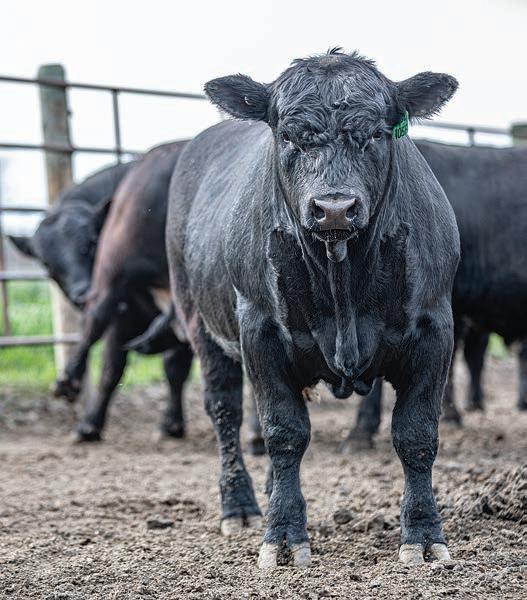
IGS TV shares educational content relevant to seedstock and commercial producers throughout the industry.
is to capture the real value of feeder cattle. This is difficult to do in a traditional market setting — a calf with superior genetics and management likely won’t bring more than its counterparts unless there is record of this added value.
Dr. Odde explains that the FPC can be used as a marketing tool by producers, and that it adds confidence for buyers. Producers input known genetics of a group of calves, like sire registration numbers and cow herd breed composition. More information is always better, but this tool was created with commercial producers in mind, and the information being asked for is with real-world expectations in mind. Management practices, like vaccination, are critical in the future success of feeder cattle. This information is submitted, and an FPC certificate is returned, which can be shared at sale time, or used to determine how much additional value should be placed on a group of feeder calves. .